Key takeaways
- Keep findings tied to the model in which they were observed.
- A cell response does not establish clinical effectiveness.
- Identity and batch documentation remain essential for reproducible research.
For laboratory research education only. Not medical advice or instructions for human or animal use. RetaSet supplies research materials and publishes this guide; catalog links lead to our own products.
What this BPC-157 research guide covers
This is an introduction to evaluating the evidence, not a comprehensive systematic review. It focuses on a primary cell-based paper and a regulatory scientific assessment to show how different kinds of evidence answer different questions.
BPC-157 is discussed in research concerning cellular and tissue responses. The existence of that literature should not be turned into a blanket promise of injury recovery. A meaningful summary states what was tested, the conditions used and the uncertainty that remains.
A primary study: tendon fibroblast receptor expression
In a 2014 paper, Chang and colleagues studied BPC-157 in tendon fibroblasts and reported increased growth hormone receptor expression, with additional experiments on the response to growth hormone. The work concerns a specific cellular setting and measured responses.
That finding is a mechanistic observation. It does not by itself establish clinical healing, the safety of repeated exposure or equivalence between the research material used in the paper and a separate retail vial. Readers should examine the complete methods before attempting to compare their own results.
Why evidence gaps belong in the summary
FDA’s scientific assessment discusses unresolved questions around BPC-157 safety, immunogenicity and material characterization. A cautious research summary should retain those gaps instead of treating a lack of definitive harm data as reassurance.
Regulatory discussions and scientific conclusions also have different roles. This article does not provide a jurisdiction-specific legal opinion. For an institution’s work, the responsible team should check applicable requirements separately from reviewing biological evidence.
How to assess a BPC-157 paper
Read the methods with a structured set of questions. The answers often determine whether a result is relevant to your project.
- Was the experiment cell-based, ex vivo, animal-based or clinical?
- Was the material’s identity, source and form described?
- Were controls and endpoint definitions appropriate to the claim?
- Were blinding, sample size and statistical methods reported?
- Were negative findings, missing observations and limitations included?
- Does the conclusion stay within the measured outcomes?
Material documentation and reproducibility
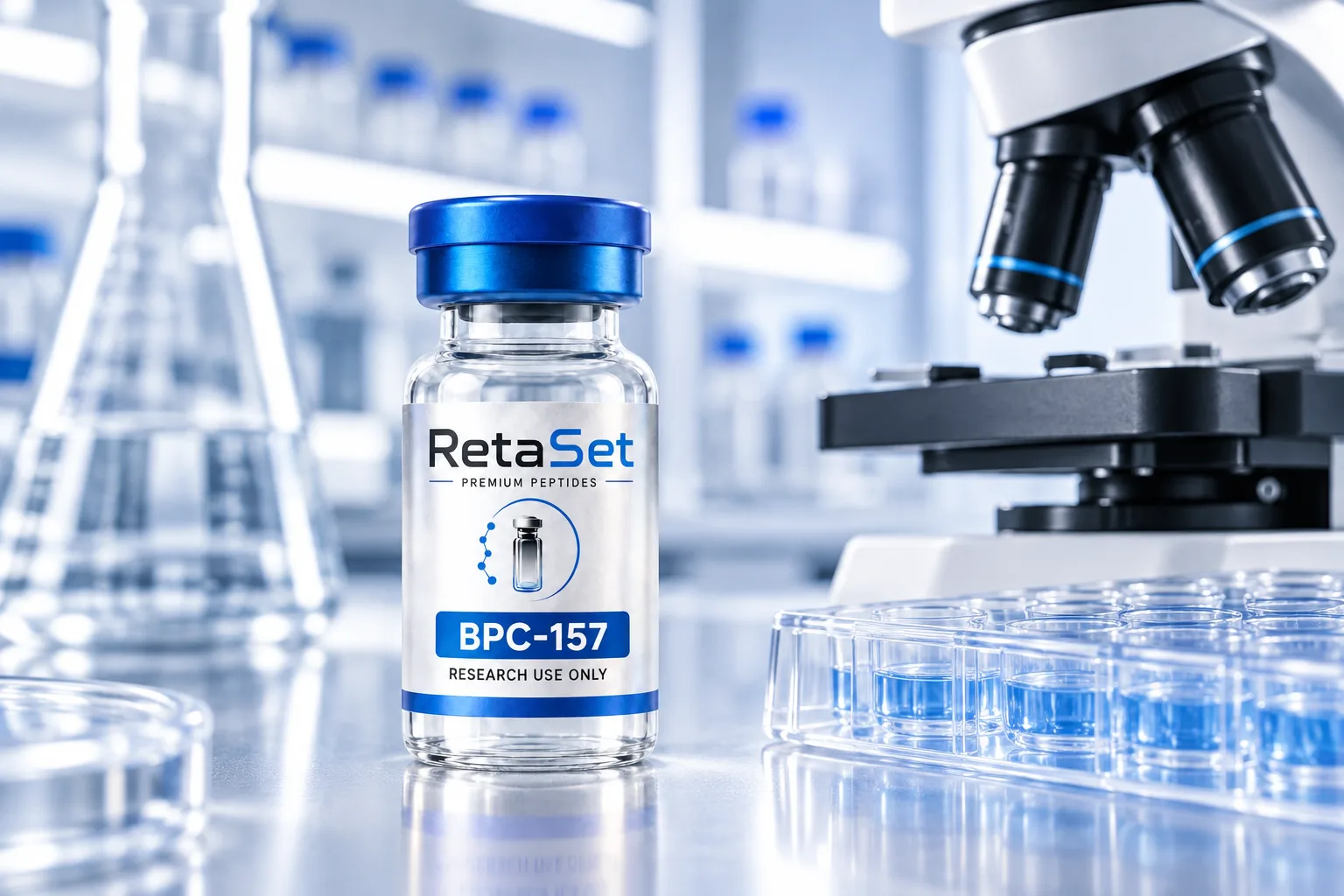
For laboratory procurement, link the product identifier to the lot report and the preparation record. Do not treat a product name as a complete chemical specification. Confirm the form, stated quantity and methods relevant to your assay.
If a supplier’s page lacks an essential detail, request it before comparing the material with a published protocol. The highlighted product link below is a route to specifications for research procurement; it is not an endorsement of therapeutic use.
Common questions
Does BPC-157 research prove that it heals injuries in people?
The experimental findings discussed here do not establish that conclusion. Cell-based results and limited safety information cannot be converted into a treatment recommendation.
What should I check before sourcing BPC-157 for laboratory work?
Confirm the exact material specification, batch traceability, relevant analytical results and institutional suitability for the planned research.
Explore research materials
View BPC-157 research material specifications and the wider research peptide catalog.
Product links support research procurement only. Availability and specifications can change. Contact RetaSet for missing product documentation. Read the shipping policy.